
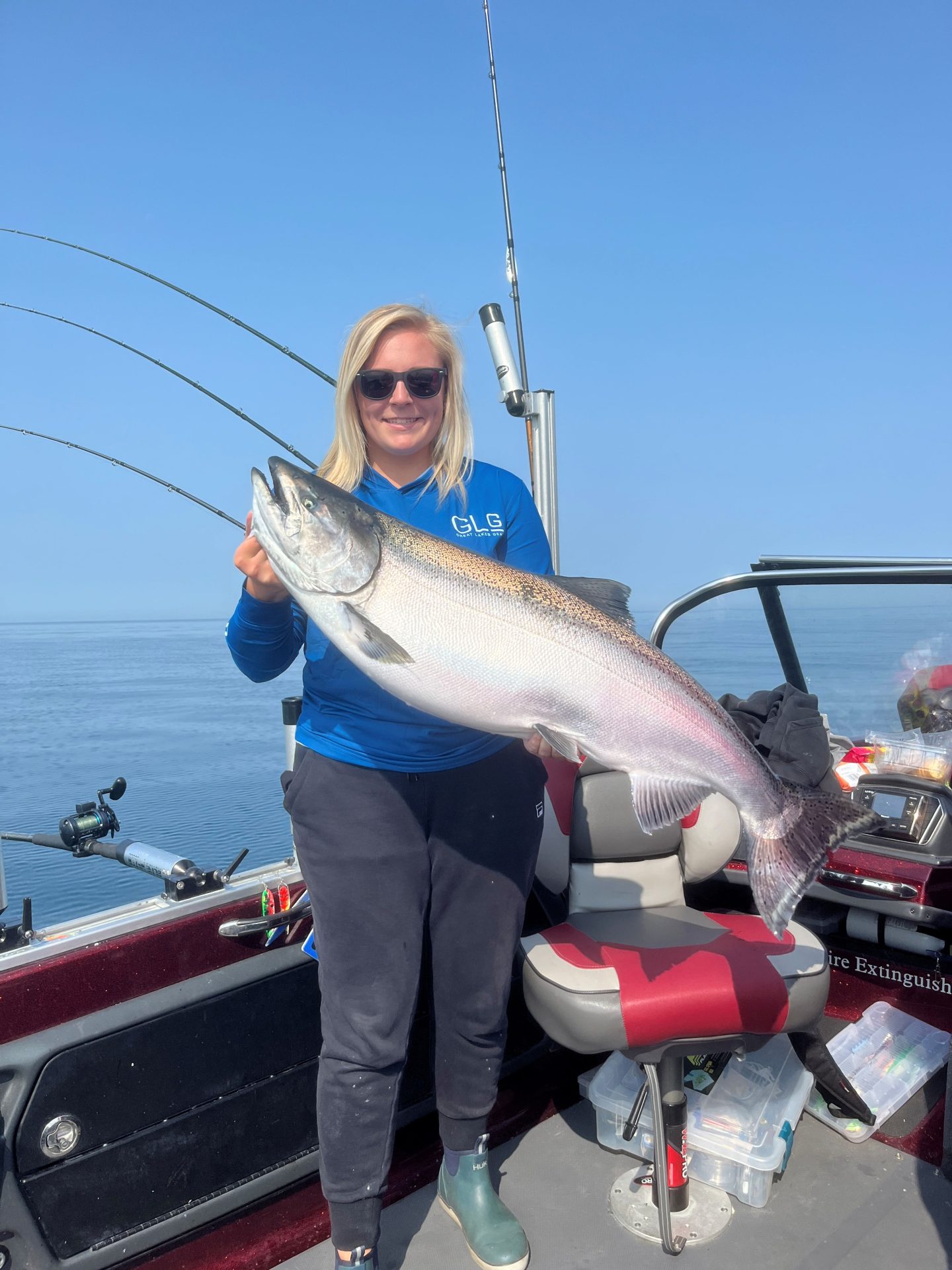
If you’re looking for a Whitehall salmon fishing charter, this area on Lake Michigan is one of the most consistent and productive fisheries on the west coast of Michigan.
Every season anglers travel here to target King Salmon, Coho Salmon, Steelhead, and Lake Trout, and Whitehall consistently produces quality fishing throughout much of the year.
As a full-time charter captain based on White Lake, I’ve spent countless mornings watching how conditions change and how fish respond. Water temperatures shift, bait moves, and salmon follow patterns that can be predictable at times—but also change quickly depending on wind and water conditions.
This guide breaks down what makes Whitehall such a strong salmon fishery and what to expect throughout the season.
What I’m Looking For Before I Ever Set Lines
Before anything goes in the water, there’s always a simple process going through my head. Salmon fishing on Lake Michigan isn’t about just dropping lines—it’s about reading what the lake is telling you.
Every morning starts with a few key questions:
- Where is the clean/dirty water break?
- Where is the temperature I need for active fish?
- Where is the bait?
- What direction is the wind pushing surface water?
- Are fish relating to structure or suspended offshore?

Around Whitehall, this decision-making matters even more because conditions can change quickly due to offshore structure and wind influence.
If I’m not immediately finding fish or getting consistent marks, I’ll start by trolling west to cover fresh water and locate active fish. Once I start seeing consistent marks or bites, I’ll turn on them and work that depth and zone.
If fish disappear again, I go right back to searching west until I relocate them, then turn back onto them whether that’s north or south. The key is not guessing—it’s relocating fish and staying locked in once they’re found.
Once temperature, bait, and consistent marks line up, you can usually build a program that produces fish.
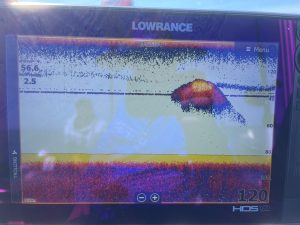
Electronics play a big role in that process. One thing many anglers don’t realize is that standard transducers don’t always show the thermocline or subtle changes in the water column clearly. That’s where our Airmar TM150 helps. It allows us to better identify temperature breaks, disturbances in the water, bait concentrations, and fish holding deep below the boat, helping us stay around productive water throughout the day.
The rest of the trip is simply staying flexible enough to adjust when the fish move.
Why Salmon Move the Way They Do Around Whitehall
Salmon in Whitehall are constantly reacting to three main things: structure, temperature, and baitfish movement.
Whitehall’s offshore structure creates natural travel corridors where bait concentrates. Temperature layers shift throughout the day, which causes fish to move up and down in the water column. When bait shifts, salmon follow.
Nothing is random—it’s all a response to changing conditions.
Understanding this is what separates a good day from a great one on Lake Michigan.
Why Whitehall Is a Strong Salmon Fishing Port
Whitehall sits where White Lake connects directly to Lake Michigan, giving anglers fast access to productive offshore water.
One of the biggest advantages here is structure. Whitehall is one of the first ports where the lake begins dropping into deeper water much closer to shore. These steep breaks and ledges create natural feeding zones for salmon throughout the season.
Because of this structure, fish often relate tightly to depth changes as they move through the area. When combined with consistent bait presence and cold water access, it creates a very reliable fishery.
Some days fish are close to shore. Other days we run offshore to find the right temperature and bait. Flexibility is key.
This structure also supports a strong Lake Trout fishery, especially in summer when trout hold tight to deeper breaks.
What Salmon Species You Can Catch
King Salmon (Chinook)
The main target. Strong, fast, and capable of trophy-size fish that test both gear and anglers.
Coho Salmon
Aggressive school fish that can create fast action when you find them.
Steelhead
Fast, acrobatic fish known for long runs and jumps.
Lake Trout
A consistent part of the fishery that often saves tougher days and provides steady action.
When Is the Best Time for a Whitehall Salmon Fishing Charter?
Spring (April–May)
Early season brings Brown Trout and Lake Trout near shore, followed by Kings and Coho moving in offshore.
May is one of the most consistent months of the year.
When Kings first arrive, we often find them surprisingly shallow. Cold water keeps them higher in the water column and more willing to chase.
One of the main things we look for in May is green water. As the lake warms and plankton blooms develop, that slight color change concentrates bait—and where bait goes, salmon follow.
This is also when spoon fishing shines because fish are willing to chase and we can cover more water.
Early Summer (June)
June is a transition month.
Bait movement can spread fish out, especially as bait shifts into White Lake and inland areas. Fishing can still be good, but it requires more searching.
Lake Trout fishing often becomes very strong during this time, and mixed-bag days are common with Kings, Coho, Steelhead, and trout all in play.
Peak Summer (July–August)
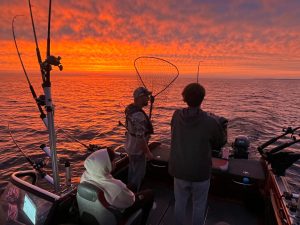
This is trophy season.
King Salmon are at their largest, and success depends heavily on finding cold water and bait. Fish move quickly, and adjustments matter throughout the day.
As summer progresses, more salmon begin staging in front of the ports and river systems they will eventually run to in the fall. These fish are feeding heavily and putting on their final growth before the spawning run, which is why July and August often produce some of the biggest salmon of the season.
Whitehall is unique because it offers quick access to deep water, offshore structure, and a healthy population of naturally reproduced salmon. According to Michigan DNR data, the White River system is known for natural reproduction, and many of the salmon caught off Whitehall are naturally produced fish rather than recently stocked fish. Combined with staging fish moving through the area, this helps create a strong late-summer fishery for anglers targeting mature Kings.
Fall (September–October)
Fall fishing can be some of the most exciting of the year.
We often see fast-paced action with a mix of King Salmon, Coho, and Steelhead. These younger “feeder” fish are excellent eating and can create steady action across multiple rods.
September also produces some of the largest Kings of the year as fish stage near rivers and shoreline structure.
For current Lake Michigan conditions and recent fishing activity, you can check our latest Whitehall fishing reports. We update them regularly throughout the season to track water temps, bait movement, and what’s been working on the water.
How a Typical Morning on a Whitehall Salmon Fishing Charter Looks
Trips start early while conditions are calm and fish are active.
We check temperature, wind direction, bait, and recent fish movement before choosing where to start.
Some mornings we set up close to the harbor. Other days we run right offshore immediately.
Once lines are set, we spread gear across multiple depths. As the sun rises, fish often slide deeper, and we adjust accordingly.
The goal is simple: stay flexible, read the water, and stay with the fish.
How Deep Do You Fish for Salmon?
Depth changes throughout the day.
Early and late in the day, fish often feed higher in the water column. As light increases, they drop deeper into cooler water.
In midsummer, it’s not uncommon to fish 100–150 feet down in 180–220 feet of water.
When fish are deep, meat rigs, attractor flies, and tuned downriggers become key tools for triggering bites.
What Tackle Is Used for Lake Michigan Salmon
Common setups include:
- Downriggers
- Dipsy Divers
- Leadcore
- Copper
Spoons, flashers, and flies are the main lure types.
Each rod covers a different depth to find where fish are active.
Why Hire a Whitehall Salmon Charter
A charter gives you access to experience that shortens the learning curve dramatically.
Conditions change daily on Lake Michigan, and reading those changes is what produces consistent fishing.
The goal is always the same: put you on fish and make the experience enjoyable.
Final Thoughts
Whitehall offers one of the most consistent and interesting salmon fisheries on Lake Michigan.
Between offshore structure, deep water access close to shore, bait movement, and multiple species, there’s always something happening.
No two trips are the same—that’s what makes it special.
Ready to Experience Whitehall Salmon Fishing?
Whether you’re looking to catch your first King Salmon or want to learn how we locate and capitalize on changing conditions throughout the season, a guided trip can shorten the learning curve and put you on fish faster.
From spring Coho and Kings to summer trophy salmon and fall action, every trip is tailored to the conditions we’re given that day.
If you’re ready to experience Lake Michigan salmon fishing out of Whitehall, check availability and book your trip today.